
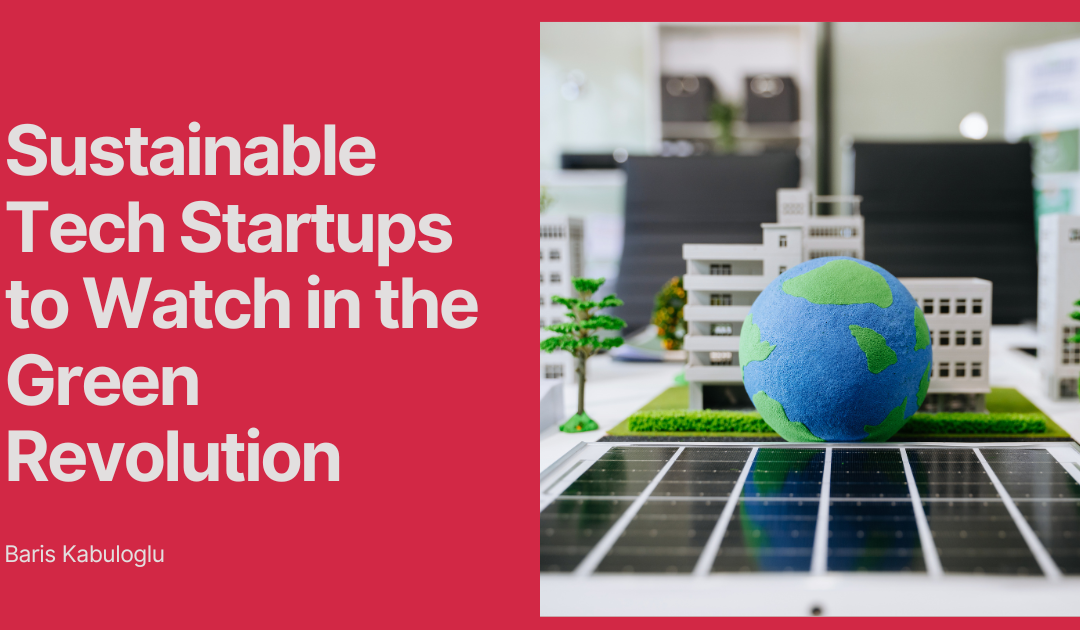
The green revolution is no longer a distant vision—it’s a rapidly accelerating movement fueled by innovation, investment, and urgency. As climate change intensifies and global sustainability goals become more ambitious, sustainable technology startups are stepping up with bold solutions. From clean energy and carbon capture to electric mobility and alternative proteins, these companies are reshaping industries while redefining what growth looks like in a climate-conscious world.
Here’s a closer look at some of the most promising sustainable tech startups leading the charge—and why they matter.
1. Climeworks: Scaling Carbon Removal
One of the most pressing climate challenges is reducing excess carbon dioxide already in the atmosphere. Climeworks is pioneering direct air capture (DAC) technology that physically removes CO₂ from the air and stores it underground.
Unlike traditional carbon offset programs, Climeworks focuses on permanent carbon removal. Its facilities in Iceland capture thousands of tons of CO₂ annually, partnering with companies committed to achieving net-zero goals. As governments and corporations prioritize carbon removal credits, DAC technology could become a crucial pillar of climate mitigation strategies.
2. Northvolt: Powering the Electric Future
The global transition to electric vehicles (EVs) demands sustainable battery production. Northvolt is addressing this by building some of the world’s greenest lithium-ion batteries using renewable energy.
Based in Sweden, Northvolt emphasizes circular production, including battery recycling to recover valuable materials. By reducing the carbon footprint of battery manufacturing, the company is helping EVs become truly sustainable from production to end-of-life. As EV adoption rises globally, battery innovation will play a central role in reducing transportation emissions.
3. Beyond Meat: Reinventing Protein
Food production accounts for a significant portion of global greenhouse gas emissions. Beyond Meat has transformed the alternative protein market by creating plant-based meat products designed to replicate the taste and texture of animal meat.
While alternative protein is becoming mainstream, startups like Beyond Meat are proving that sustainability and scalability can go hand in hand. Reduced land use, lower water consumption, and decreased emissions make plant-based innovations a key solution in building a more sustainable food system.
4. Impossible Mining: Responsible Resource Extraction
Renewable energy and EV technologies rely heavily on critical minerals such as lithium, cobalt, and nickel. However, traditional mining methods can be environmentally destructive. Impossible Mining is developing autonomous underwater robots designed to collect critical minerals from the ocean floor with minimal ecological disruption.
Though deep-sea mining remains controversial, the company aims to design methods that reduce habitat destruction compared to conventional land mining. As clean energy demand grows, responsible sourcing of raw materials will be essential.
5. Form Energy: Long-Duration Energy Storage
Renewable energy sources like wind and solar are intermittent, meaning energy storage is vital for grid stability. Form Energy is developing iron-air batteries capable of storing electricity for up to 100 hours—significantly longer than conventional lithium-ion systems.
Long-duration storage can smooth out supply fluctuations and make renewable grids more reliable. By offering cost-effective solutions, Form Energy is tackling one of the biggest barriers to widespread renewable adoption.
6. LanzaTech: Turning Waste into Fuel
Industrial emissions are another major contributor to climate change. LanzaTech captures carbon emissions from factories and converts them into sustainable fuels and chemicals using biotechnology.
Instead of allowing carbon gases to enter the atmosphere, LanzaTech transforms them into valuable products such as ethanol. This circular approach reduces emissions while creating new economic value—a powerful example of how sustainability can drive profitability.
Why These Startups Matter
Sustainable tech startups are doing more than innovating—they’re transforming entire ecosystems. Their impact extends across multiple sectors:
-
Energy Transition: Cleaner production, better storage, and grid resilience.
-
Circular Economy: Recycling materials and reusing carbon waste.
-
Sustainable Consumption: Reducing environmental impact in food and manufacturing.
-
Climate Mitigation: Actively removing or preventing greenhouse gas emissions.
These companies also attract significant venture capital and government support, signaling confidence in green technologies as long-term growth engines. According to global investment trends, climate tech funding has surged over the past decade, with billions directed toward decarbonization, electrification, and sustainable materials.
Challenges Ahead
Despite rapid progress, sustainable startups face obstacles:
-
High upfront infrastructure costs
-
Regulatory uncertainty
-
Scaling from pilot projects to global deployment
-
Public skepticism in emerging technologies
However, technological advancement, falling renewable costs, and stronger climate policies are steadily reducing these barriers.
The Bigger Picture: A Green Innovation Economy
The green revolution is not limited to a single sector—it’s a systemic transformation. From carbon capture plants in Iceland to battery gigafactories in Scandinavia, sustainable tech startups are demonstrating that climate action and economic opportunity are not mutually exclusive.
As corporations commit to net-zero targets and governments introduce stricter environmental regulations, demand for climate-focused innovation will only grow. The startups leading today may become tomorrow’s industry giants, shaping a low-carbon economy that balances profitability with planetary health.
For investors, entrepreneurs, and policymakers alike, watching this space isn’t just interesting—it’s essential. Sustainable technology is no longer a niche category. It’s the foundation of the next industrial era.
The green revolution has begun. And these startups are helping power it forward.